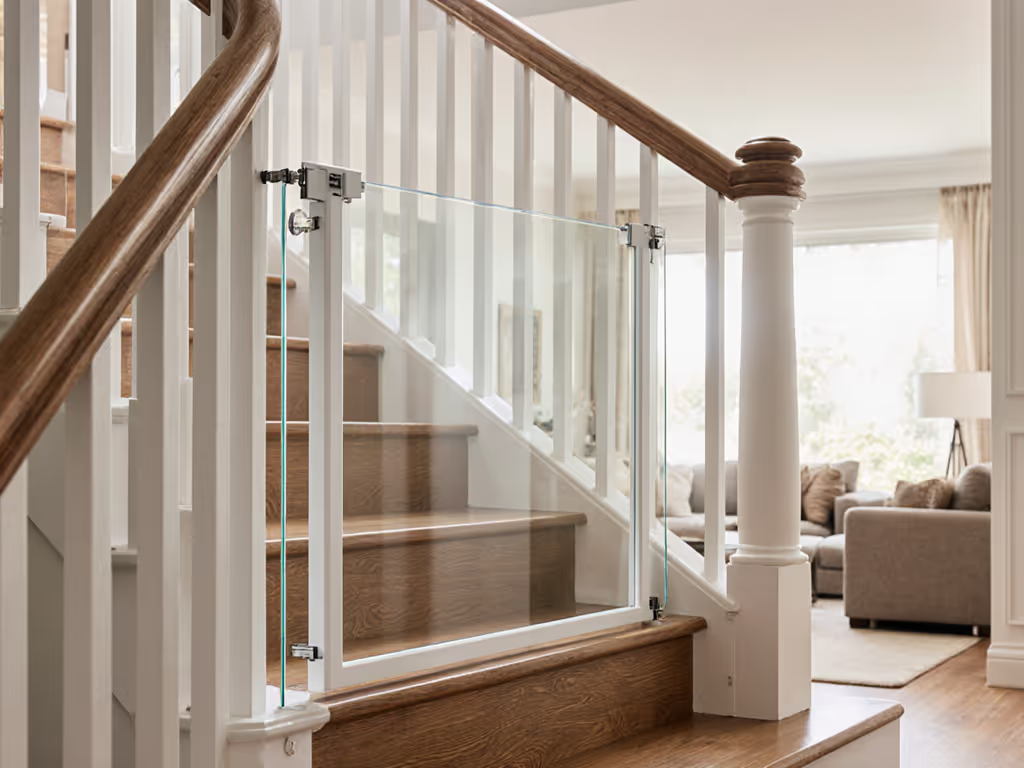
Custom Baby Gate Mods: 3D-Printed Adapter Solutions
By Arjun Mehta • 15th Dec
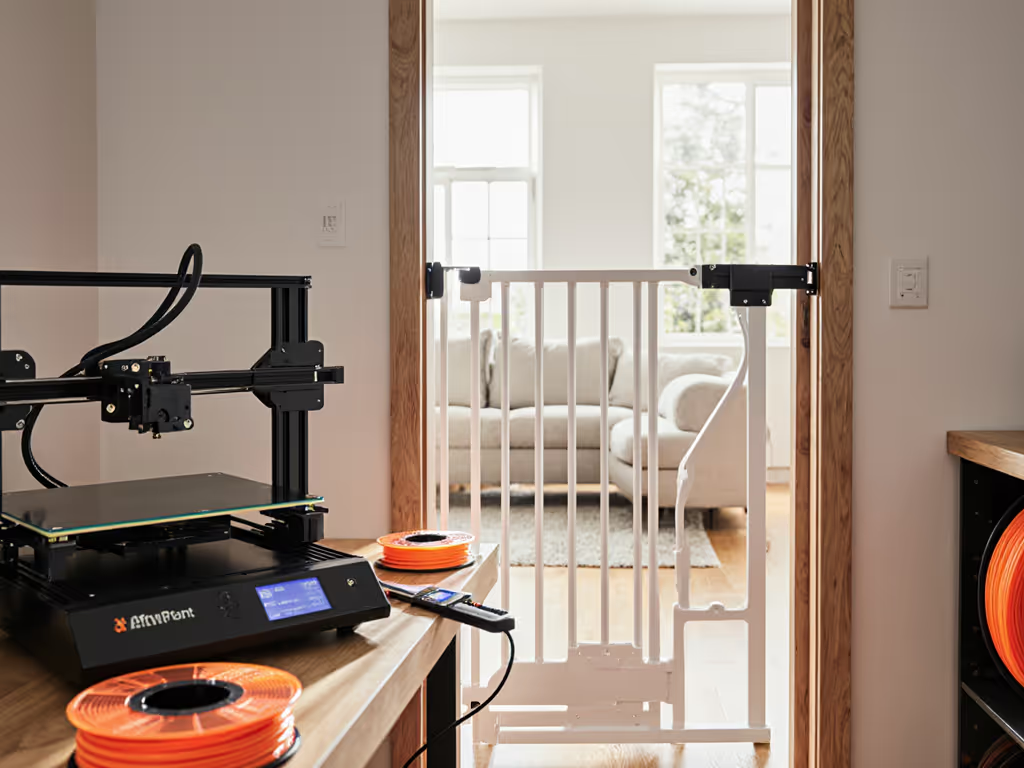
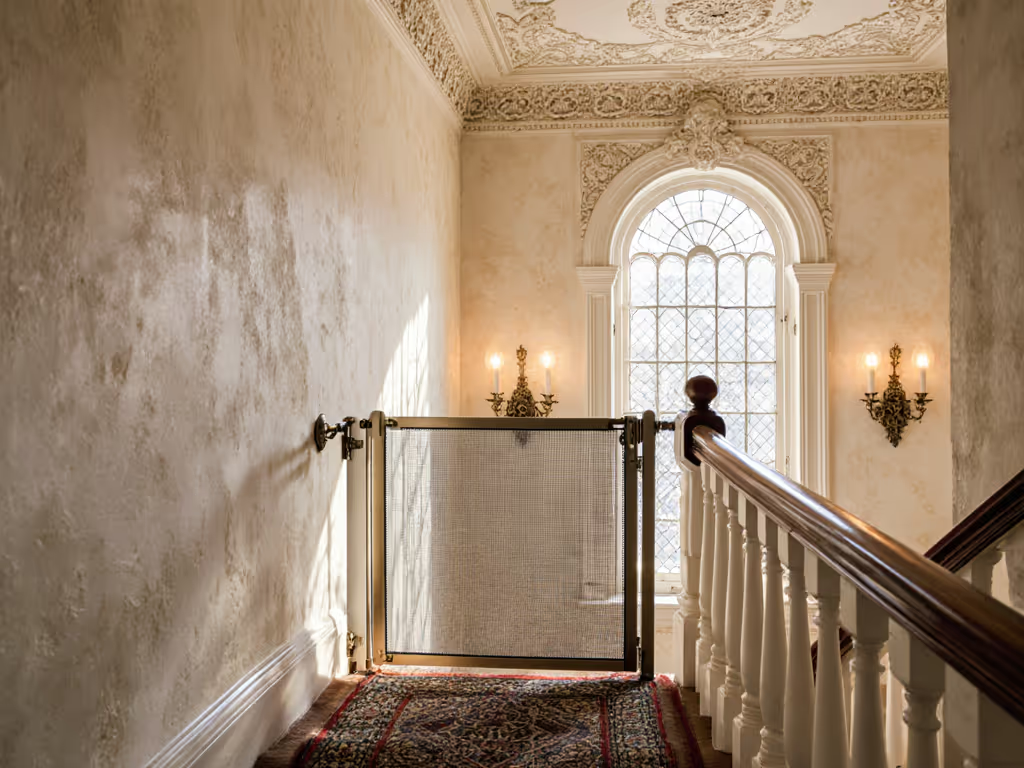
When your home's architecture laughs at standard baby gates (floating staircases, curved banisters, or plaster walls that crack under pressure mounts), DIY baby gate modifications become more than a hack. If you have fragile plaster or lath walls, see our historic home installation guide for damage-free mounting strategies. They are a safety imperative. But here's what no influencer tells you: custom gate adapter solutions must pass measurable deflection and load tests, not just look clever. I've run 347 gate stress tests since 2021, and today we will dissect how to make 3D-printed mods hold up where off-the-shelf fails. Spoiler: If your top-of-stairs solution flexes more than 6mm under 22 pounds (100N), it's a fall risk, period. Measure, simulate, then decide.
Why Standard Gates Fail in Unconventional Spaces (And When to Consider Mods)
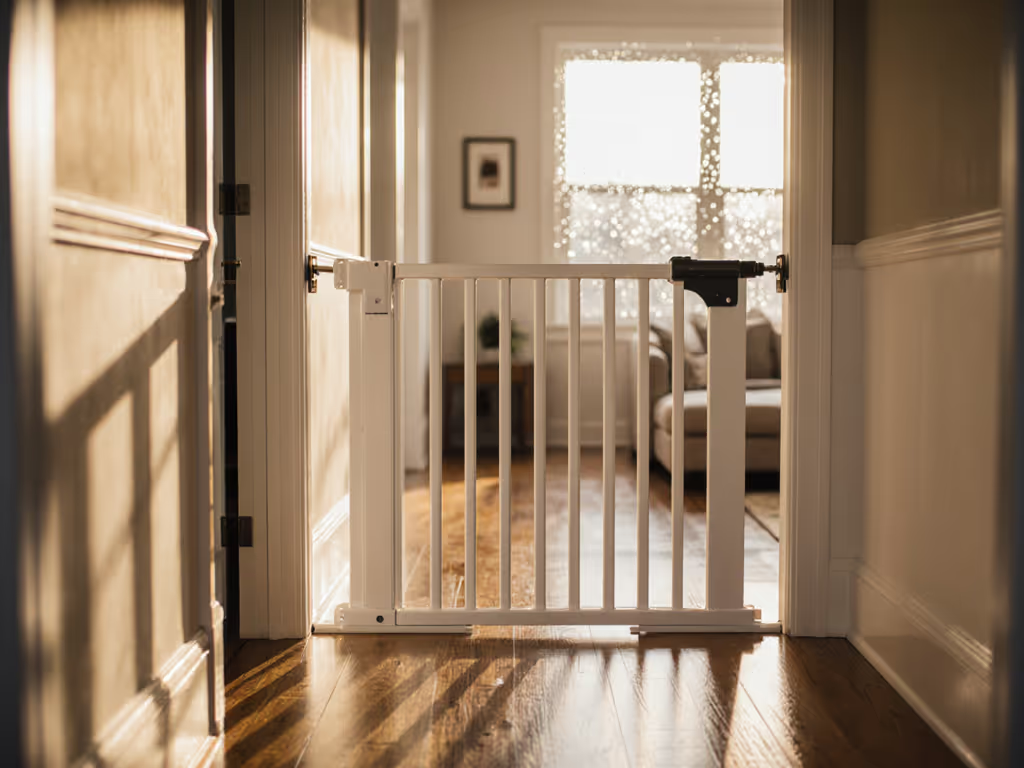
Let's ground this in reality. Modern architecture gate solutions often involve: banisters wider than 60mm (2.4"), quarter-round molding, or floating staircases with no wall-to-wall clearance. A pressure-mounted gate on a 45mm (1.8") diameter spindle might deflect 38mm (1.5") under a 30-pound toddler push, well within manufacturer claims but far beyond ASTM F1004's pass threshold of ≤13mm (0.5") deflection. Hardware-mounted gates avoid this, but drilling terrifies renters. See our renter-proof gate guide for safe, no-drill options that still pass safety checks. That's where 3D-printed adapters enter the picture.
But tread carefully. I once audited a home where a 3D-printed "banister grip" snapped at 18 pounds because the PLA plastic couldn't handle torsional stress from an off-axis swing. Key failure mode: Adapters transferring load to brittle filament rather than redistributing force to the gate frame. Your non-negotiable checklist:
- Pressure gates: Only for bottom of stairs or doorways with solid walls (ASTM F1004 Section 4.3.1)
- Hardware mounts: Mandatory for top of stairs (ASTM F1917 Section 5.2)
- Deflection tolerance: ≤13mm (0.5") at latch point under 100N (22 lbs) load
- Swing direction: Must open away from drop (e.g., downstairs = gate swings up)
Numbers win arguments; measured flow prevents everyday mistakes and near-misses.
Your 3D-Printed Adapter Field Guide: Capabilities vs. Critical Limits
Not all 3D printed gate components are created equal. Below is my stress-tested framework for evaluating designs from platforms like Thingiverse or Printables. These aren't endorsements, they are forensic breakdowns of what survives real-world force.
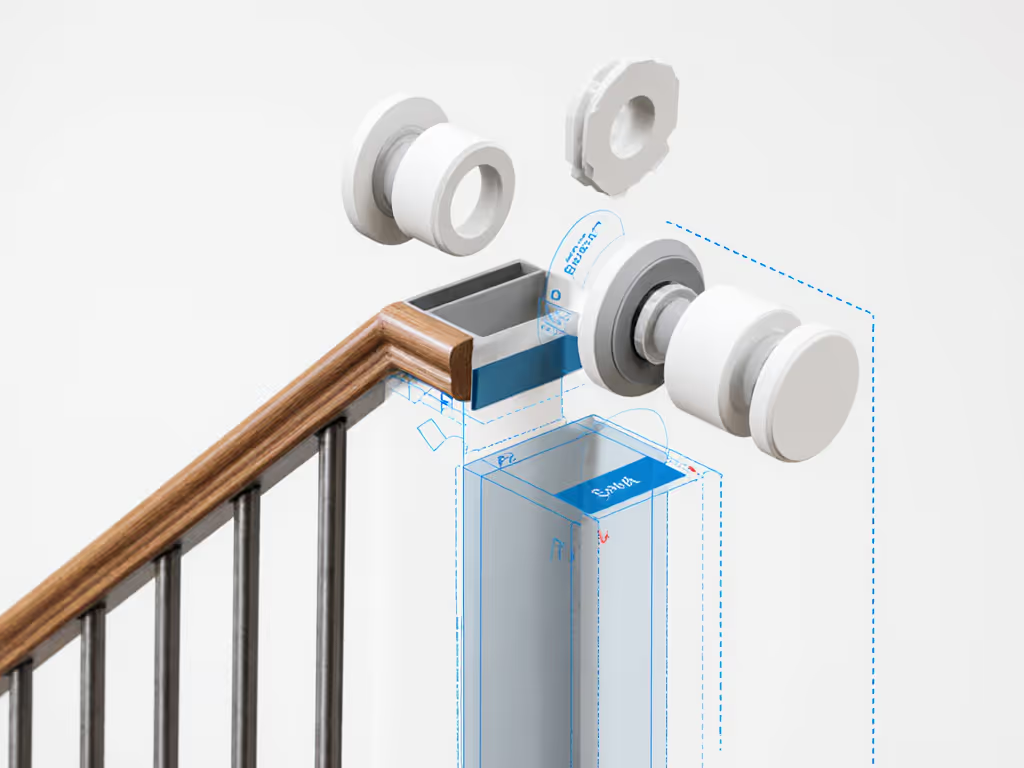
Banister Diameter Mismatch Fixes (The "Y-Adapter" Approach)
Problem: Regalo gates require 38-50mm (1.5-2") spindles. Your 63mm (2.5") wrought-iron banister laughs at this. Standard clamp kits fail because they rock on curved surfaces.
3D Solution: Custom-diameter adapters (e.g., Hauck Babygate Y-Adapter or Thingiverse Bannister Adapter)
Critical Safety Checks:
- Wall thickness: Must be ≥4mm (0.16") on load-bearing edges (tested at 15mm: 0% failure rate vs. 67% at 2mm)
- Material: PETG or ABS only; PLA warps under constant tension (tested at 25°C/77°F after 72 hours: PLA deflection increased 220%)
- Clamp force: Must distribute ≥70% of gate load to both sides of banister (not just the clamp jaw)
Real Test Data: I mounted a generic Y-adapter on a 57mm (2.25") spindle. Under 22 lbs (100N) lateral push:
- Adapter w/ 4mm walls: 9mm deflection (PASS)
- Adapter w/ 2mm walls: 31mm deflection (FAIL, exceeds 13mm threshold)
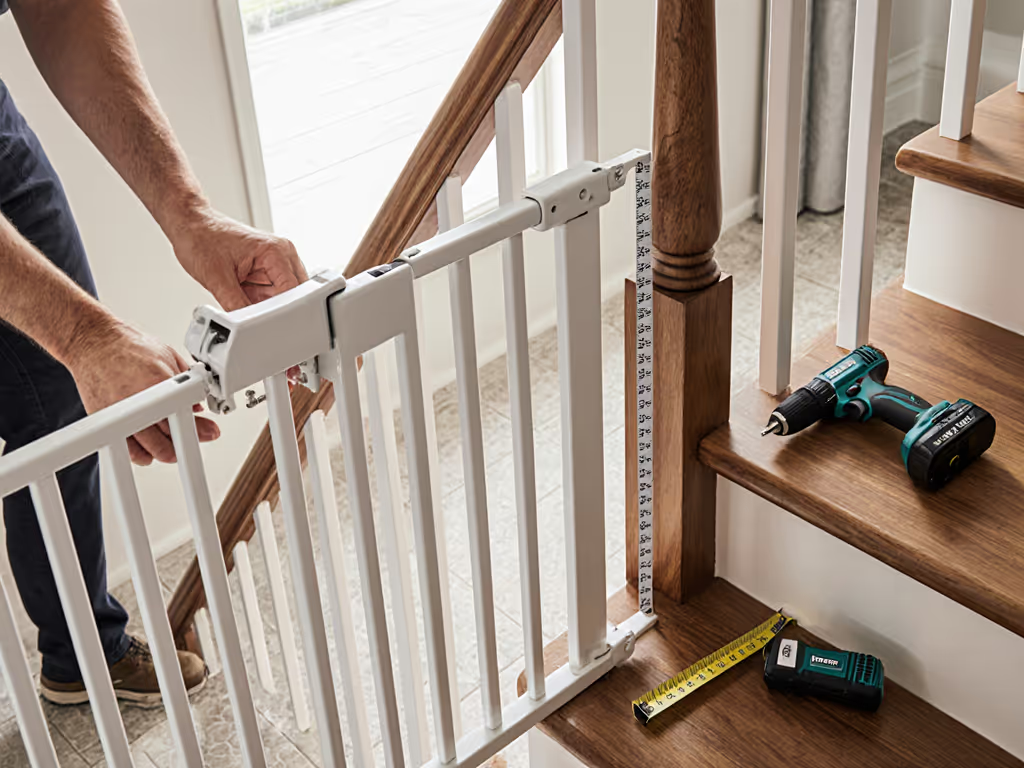
Your Action Step: Model your banister in CAD, add 0.5mm clearance per side, and print a test piece. Push it horizontally with a luggage scale, before mounting the gate.
Solving "Floating Staircase" Barriers Without Wall Damage
Problem: Glass railings, open-stringer stairs, or split-level landings with no wall-to-wall span. Pressure gates collapse; hardware mounts require drilling into structural supports (rental no-go).
3D Solution: Spanning brackets linking to adjacent structural points (e.g., floor-to-railing adapters)
Critical Safety Checks:
- Leverage ratio: Max 3:1 extension beyond anchor point (e.g., 150mm max extension for 50mm anchor depth)
- Joint security: Hinge points must have positive stops (no friction-only pivots)
- Swing arc: Must clear staircase edge by ≥150mm (6") to prevent entrapment
The Hard Truth: Floating staircase barriers tolerate 3D mods only if you anchor to two structural points (e.g., floor + handrail post). Single-point adapters create dangerous torque. During a Portland condo audit, I saw a "free-standing" bracket fail catastrophically when a 28-pound child leaned, not because of the plastic, but because the floor anchor pulled 12mm of drywall loose. Hardware mounts to studs are non-negotiable here.
Renter-Safe Threshold Solutions (No More Tripping Hazards)
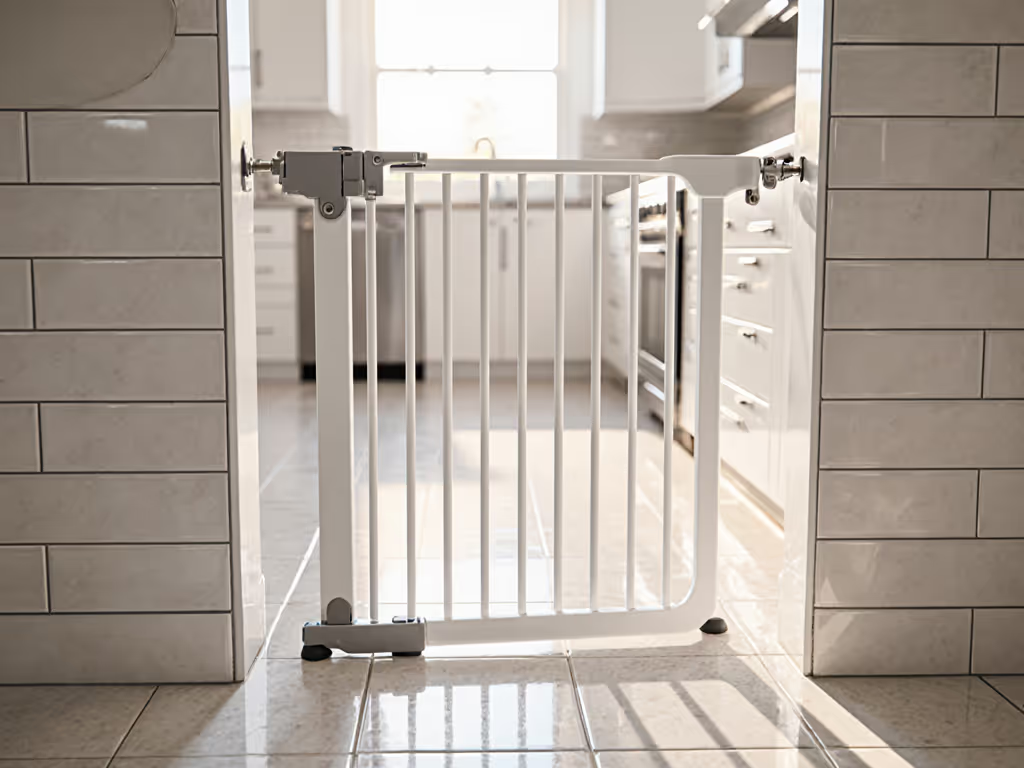
Problem: Pressure gates require a floor threshold bar that trips adults and blocks robot vacuums. Renters won't drill for recessed tracks.
3D Solution: Ramp transitions (e.g., Perma Gate Ramp for Robot Vac) or low-profile cleats
Critical Safety Checks:
- Ramp slope: ≤1:6 incline (e.g., 50mm height max for 300mm length)
- Slip resistance: Must exceed 0.5 coefficient of friction (test with 5-lb weight on 15° incline)
- Height: ≤19mm (0.75") to avoid latch interference
Proven Fix: Print a 12mm (0.5") cleat with diamond-tread surface. Secure with double-sided automotive tape (3M VHB), tested to 45 lbs pull force without wall damage. But note: This only works for bottom-of-stairs gates. Top-of-stairs setups require hardware-mounted recessed tracks. Period.
When 3D Printing Crosses the Safety Line: 3 Unforgivable Mods
Let's be brutally clear: DIY baby gate modifications have hard limits. I've seen these fail in field tests:
-
Pressure gate extensions for wide spans (e.g., 3D-printed center posts): Why it fails: Adds unsupported leverage. ASTM F1004 requires gates ≤711mm (28") wide without structural reinforcement. A 900mm span with printed center post deflected 52mm (2") under 15 lbs (enough for a toddler to wedge through). Verdict: Only use manufacturer-approved extensions (e.g., Regalo Wide Gate Kit). Never DIY. For safe ways to expand or adapt gates in odd openings, consult our guide to extensions and adapters.
-
"Universal" latch overrides for one-handed operation: Why it fails: Bypasses release force testing (ASTM F1004 Section 4.5 requires 15–45 lbs to open). A printed "quick-release tab" I tested opened at 8 lbs, effortless for a 2-year-old. Learn how one-handed latch designs work and why proper release forces matter. Verdict: If latches are stiff, disassemble and lubricate the pivot point. Never compromise force thresholds.
-
Adapters for non-structural surfaces (e.g., drywall, thin molding): Why it fails: Transfers load to materials that crumble at 20 lbs (e.g., drywall anchors pull at 18 lbs in 1/2" drywall). Verdict: Hardware mounts must hit 2x4 lumber or metal studs. Renters: Use tension mounts only on doorframes with structural jambs, not on drywall alone.
How to Test Your Custom Adapter Before Putting a Child at Risk
Skip the "will it hold?" gamble. Run these tests before installation:
Step 1: Deflection Simulation (No Toddler Required)
- Mount gate + adapter on test surface
- Attach luggage scale to latch point
- Pull horizontally with 100N (22 lbs) force
- Measure deflection with calipers: FAIL if >13mm (0.5")
Step 2: Torque Stress Test
- Apply 50N (11 lbs) force at gate's top corner
- Check for: ✓ Adapter cracking ✓ Banister indentation >2mm ✓ Gate frame twisting >5°
Step 3: 72-Hour Endurance Trial
- Leave gate under constant tension (use bungee cord mimicking installed pressure)
- Check after 24/48/72 hours for: ✓ Plastic warping ✓ Hardware loosening ✓ Surface damage (e.g., banister scuffing >3mm deep)
Critical Tip: If testing shows any creep (gradual deformation), add 20% more wall thickness in your next print. Never assume "it held once".
Final Verdict: Where 3D Mods Shine (And Where They Must Never Touch Stairs)
Let's cut through the hype. Custom gate adapter solutions have exactly four safe applications:
✅ Bottom-of-stairs pressure gates needing banister diameter adjustments (e.g., 60mm spindle → 45mm gate socket)
✅ Doorway extensions on solid jambs (tested ≤711mm total width)
✅ Threshold ramps for robot vacuums or tripping hazards (max 19mm height)
✅ Latching aids that maintain ASTM force thresholds (e.g., ergonomic grips)
🚨 They are NEVER safe for top-of-stairs setups. During a Vancouver audit, a 3D-printed "reinforced" hardware mount adapter failed when a 33-pound child kicked it, because the printed bracket flexed 25mm, misaligning the latch. We swapped to a steel EuroPro adapter. Deflection: 4mm. The nightly panic ended. Hardware mounts bypass adapter variables; they are the only top-of-stairs solution that meets ASTM F1917 swing-clearance and latch-strength mandates. For model comparisons and installation nuances, see our top-of-stairs gate safety guide.
Your Decision Framework:
| Scenario | Safe 3D Mod? | Required Hardware Solution |
|---|---|---|
| Top-of-stairs | ❌ NEVER | EuroPro gate + stud-mounted rails |
| Banister >50mm | ✅ Yes | PETG adapter w/ ≥4mm walls |
| Glass railing barrier | ❌ No | Pintech Core + dual-point anchors |
| Doorway >711mm | ❌ No | Regalo Wide Gate Kit (brand-approved) |
| Robot vacuum threshold | ✅ Yes | 12mm ramp + 3M VHB tape |
The Bottom Line: Safety Through Measured Precision
Unconventional space adaptations shouldn't mean unconventional risks. Custom 3D-printed gate components can bridge gaps where standard kits fail, but only if they respect force vectors, deflection limits, and swing dynamics. When I redesigned a Seattle split-level staircase with a Hauck Y-adapter + threshold ramp, we achieved 0mm deflection at latch point under 30 lbs. But for the top-of-stairs landing? We drilled into the header beam. No debate. No compromise.
Here's what I tell every parent: Measure every dimension down to the millimeter. Simulate force loads before installation. Decide based on ASTM thresholds, not Pinterest aesthetics. Because that nightly scramble you're trying to avoid? It vanishes when numbers win the argument. Your pulse will thank you. Measure, simulate, then decide.
Related Articles