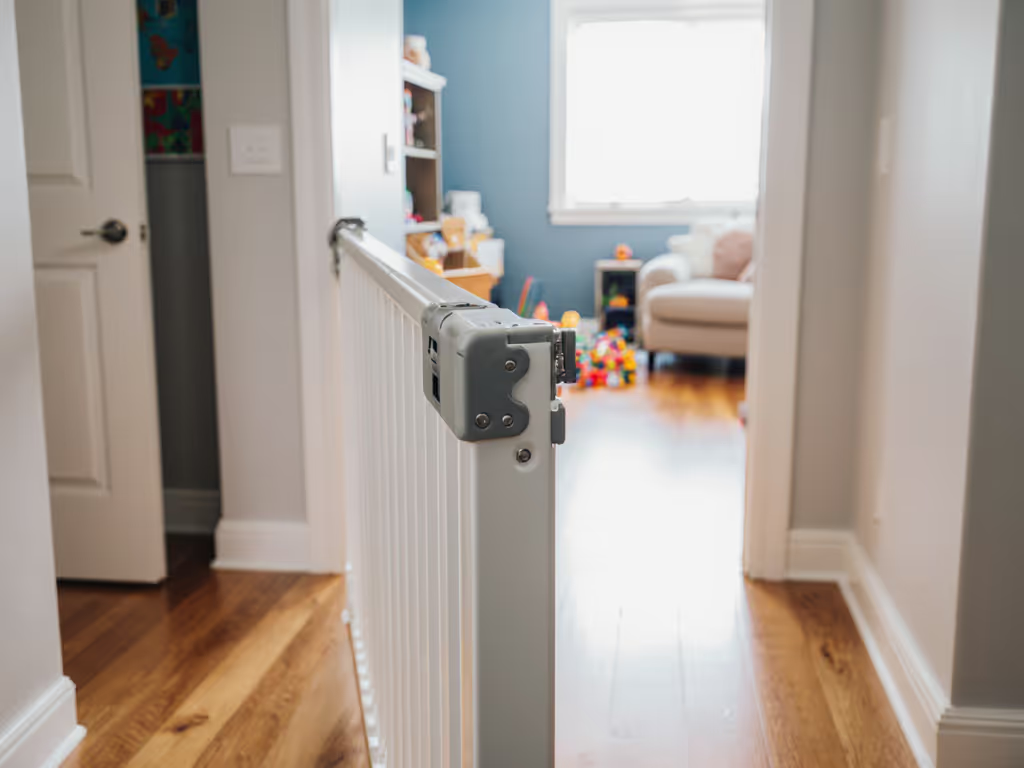
Down Syndrome Baby Gates: Hypermobile-Friendly Safety Solutions
By Nia Okoye • 13th Jan
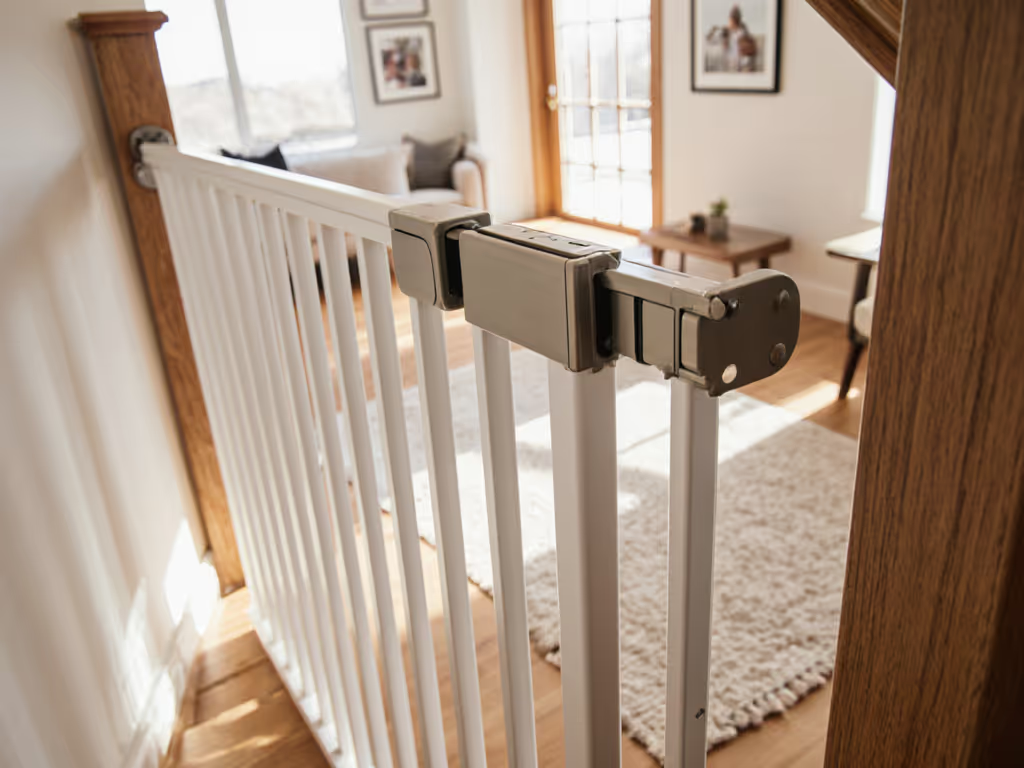
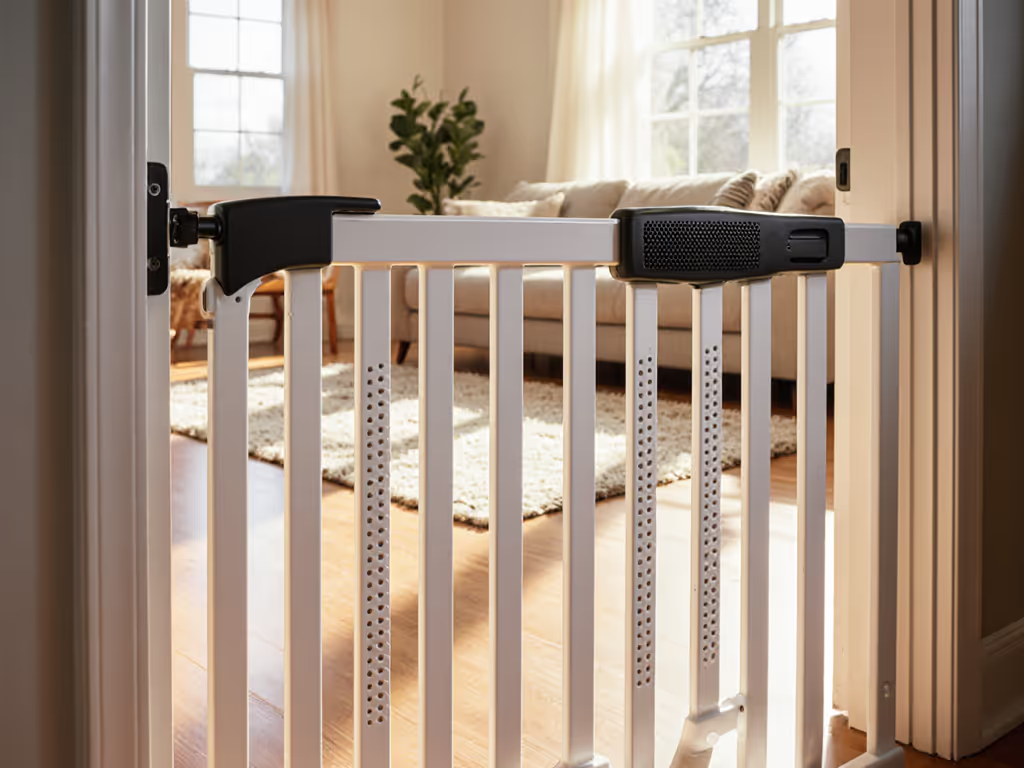
When creating safe spaces for babies with Down syndrome, standard Down syndrome baby gates and hypermobility safety barriers aren't just about keeping little explorers contained, they're about preventing joint strain, dislocations, and accidental falls that children with low muscle tone face daily. Traditional gates often overlook how hypermobility affects safety: too-tight latches strain delicate wrists, pressure-mounted systems fail under curious pushes, and narrow gaps become dangerous pinch points for hyperextended fingers. As a caregiver who's helped hundreds of families adapt their homes, I've seen how low-friction habits prevent more mishaps than complicated gear or rules. Let's build solutions that work with your child's unique needs, not against them.
Why Standard Gates Fall Short for Hypermobile Babies
Most off-the-shelf gates assume neurotypical motor control, creating hidden risks for children with Down syndrome: Learn why pressure mounts at stair tops are unsafe even for early crawlers.
- Latches requiring forceful twists or pinches strain hypermobile joints and frustrate little hands
- Gaps wider than 2.25 inches (the CPSC standard) risk fingers slipping through and joints hyperextending
- Pressure-mounted gates at stairs (a major hazard since even non-walking babies can push them down, according to Nationwide Children's Hospital data)
- Threshold bars become tripping hazards for children with gait instability
A parent once told me, "My son kept dislocating his shoulder trying to lift the gate latch, it looked fine until I watched him struggle." That's when we shifted focus from "baby-proofing" to "ability-aware gating."
Hardware vs. Pressure Mounts: Where Safety Can't Compromise
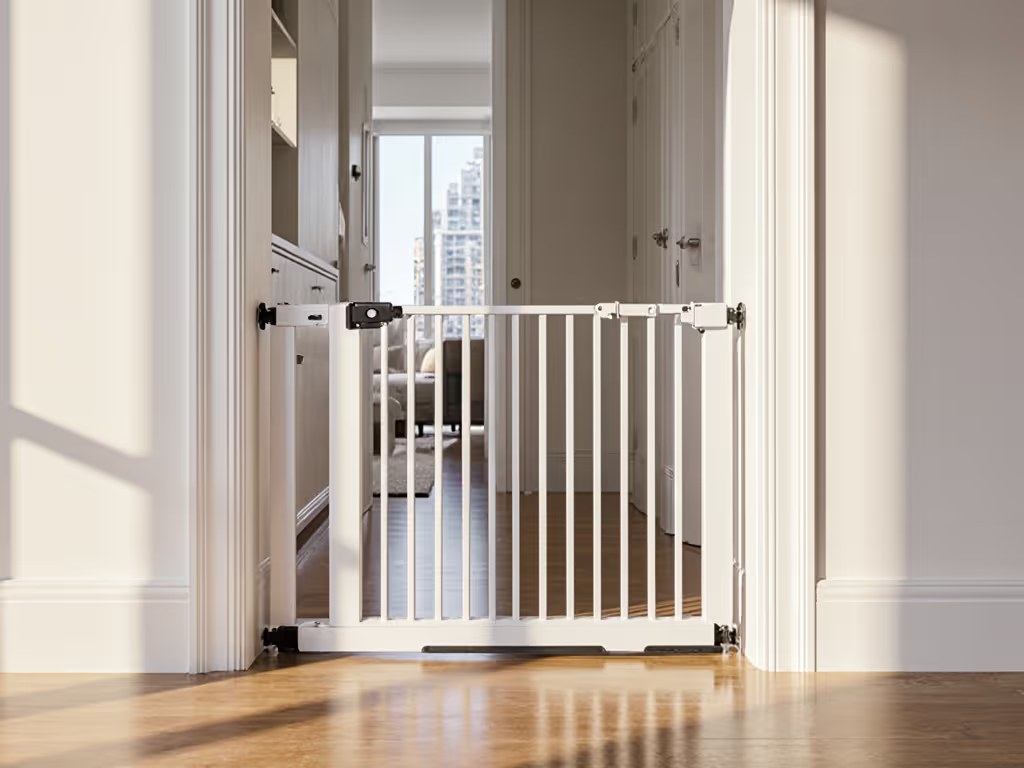
Q: My rental has plaster walls, I'm terrified to drill, but I hear hardware mounts are safer upstairs. How do I balance this? A: Safety at the top of stairs is non-negotiable: always use hardware-mounted gates (bolted to studs, not drywall) regardless of housing type. For renters, request written permission explaining it's for CPSC-compliant stair safety. Most landlords approve. Use spacers to avoid drilling into baseboards, and patch holes with matching paint afterward. At bottom of stairs or room dividers, pressure mounts can work if you:
- Choose dual-mode gates with joint-friendly gate design (like lift-release top handles)
- Install tension indicators to monitor pressure loss
- Add anti-slip pads under feet to prevent shifting
Never compromise on top-of-stairs hardware mounts. A child's mobility difference increases fall risks, making recalls like those accordion-style gates (banned by the CPSC) especially dangerous here. For a clear breakdown of when to use hardware versus pressure mounts on stairs, see our safety comparison.
Latch Solutions for Low Muscle Tone
Q: My grandparent caretaker keeps forgetting to re-latch the gate. One-handed operation seems impossible for her. What's manageable? A: This is where adaptive gate solutions shine. Explore our disability-friendly baby gates guide for renter-safe, sensory-smart latch and handle options. Forget complicated double-action latches. Instead:
- Position one-hand top-release handles on the dominant side (like we did for Grandma in our workshop anecdote, moving the handle to her right side made it stick)
- Use high-contrast stickers above the latch as visual cues ("Red dot = Closed!")
- Practice latch closure during snack time: one hand holds the cup, the other closes the gate
Gentle reminder: Practice builds safety. Muscle memory trumps perfect gear. Set up a "latch basket" near high-traffic gates: fill it with keys or a coffee mug caregivers carry daily. Closing the gate becomes part of the routine, not an extra step.
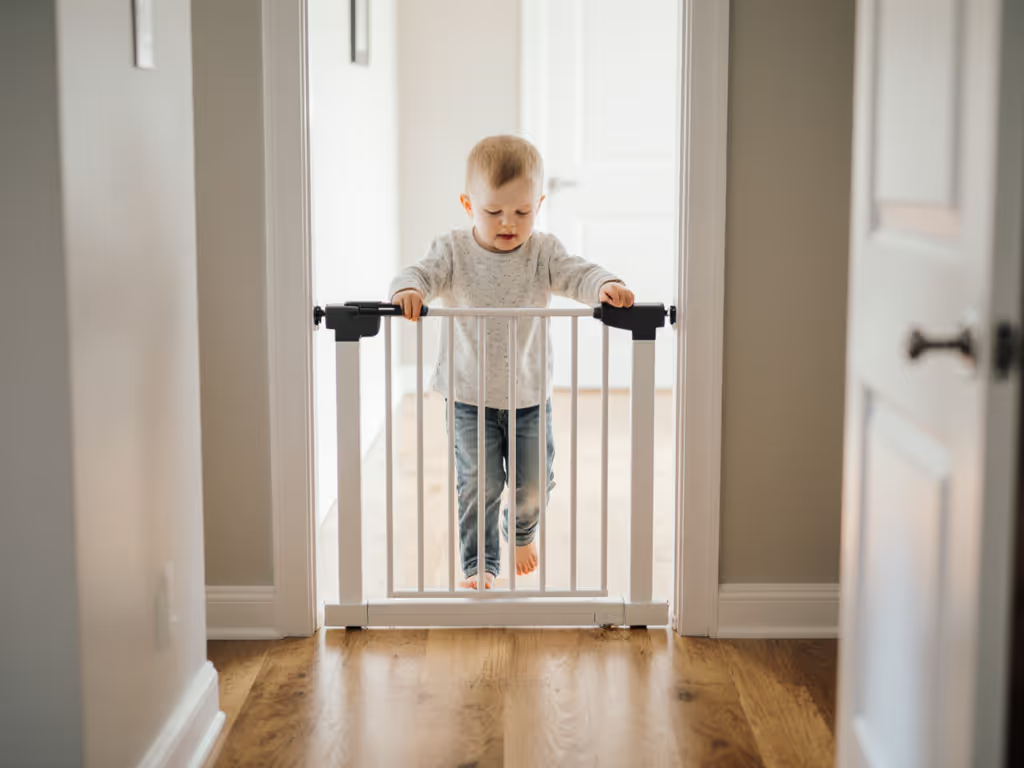
Designing for Dual Safety: Children + Pets
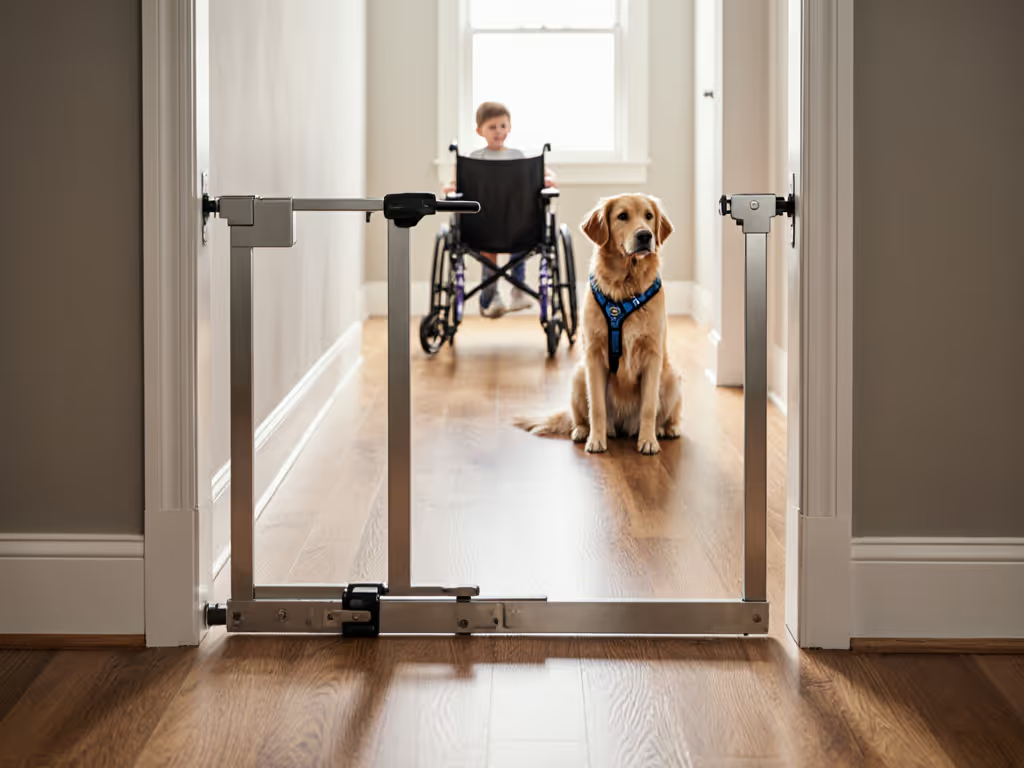
Q: We have a dog that nudges gates open when my toddler leans on them. How do we manage both? A: Special needs home safety must include pets. Prioritize:
- Swing-direction alignment: Gate should open away from pet paths (for example, not toward a dog's food bowl)
- Height adjustments: For pressure gates, add extensions to reach 32+ inches, high enough to block toddlers but allow cat pass-through
- Anti-prop barriers: Place a small ottoman or storage bin near the gate to prevent pets (or toddlers) from leaning on it
Dual-mode gates with a top-release handle help here. The handle resists accidental pet pushes while allowing quiet one-handed access. Always test swing arcs with pets present before final installation. For mixed-pet households, our wide pet gate comparison highlights gates that resist nudging and jumping.
Transitioning Out: When Gates Become Barriers
Q: My 2-year-old now tries to climb the gate. Is it time to remove it? A: With Down syndrome, developmental milestones vary widely. Watch for these signs it's time to pivot:
- Child uses gate for pulling up (risks joint strain)
- Repeated banging that loosens mountings
- Climbing attempts exceeding the gate's height
Instead of sudden removal, practice stair safety alongside the gate: Hold hands while walking stairs slowly, praising controlled movements. Gradually reduce gate use during supervised play while keeping it for unsupervised moments. For timing and developmental cues on retiring gates safely, see our data-driven removal guide. Many families switch to stair gates without horizontal bars (for example, fabric-panel designs) to eliminate climbing aids.
Your Action Plan: 3 Steps to Start Today
- Measure twice, mount once: Sketch your stairway/banister type (wrought iron? curved stairs?). Match it to mounting requirements (banister clamps work for odd angles without drilling).
- Habit audit: For 24 hours, note when gates get left open (e.g., "during dog walks"). Anchor closing to that trigger ("After leash clip = Gate check").
- Test with real hands: Before buying, have your shortest or least steady-handed caregiver try the latch. If it requires wrist bending >15 degrees, skip it.
Creating low-muscle-tone containment isn't about perfection: it's about designing for human variability. The right gate meets your child where they are today, not where generic guidelines assume they should be. When safety becomes frictionless, it becomes automatic. And that's when peace of mind finally settles in.
Make safety the default, not the exception, every day.
Related Articles